


AI vs Human Traders: Which is Better for Financial Success?
Дата публикации: 29.03.2026
The game has changed now that «Big Money» is here—I help you play it at their level. Follow me for the institutional-grade insights that move the needle for Bitcoin and Ethereum. That confidence is being tested by immediate, multi-month business reality.
Hybrid human–AI trading systems may be the future of quantitative finance

Following the launch of StockHero Version 3, you can now access AI-powered insights and use AI to create trading strategies more easily. That said, just because you use AI to create a strategy, doesn’t mean it will be profitable or outperform non-AI strategies. Financial markets are characterized by structural shifts, geopolitical events, regulatory changes, and sudden liquidity shocks.
Adaptability
This happens because AI runs on analytical algorithms without emotional bias. While manual trading has its strengths, comparing it directly with AI-driven methods can offer deeper insights into its role in today’s trading environment. If the data is incomplete, biased, or doesn’t include rare market events, the AI might struggle during unpredictable conditions.
Bitcoin holds above $70,000, but future direction hinges on Iran-U.S. ‘talks’
Real-time data ensures that the analysis your AI provides reflects current market conditions, not a snapshot from 15 or 20 minutes ago. AI models can process earnings call transcripts, news headlines, and social media chatter to gauge market sentiment around specific stocks or everestex testimonials sectors. While this capability lives primarily in the language model itself, it becomes far more powerful when combined with real-time market data. Furthermore, AI tools are integrated into the platform for all traders to use.
Human Trading Strength: Market Adaptability
When economic conditions change or correlations break down, these models may generate inaccurate signals and expose portfolios to unexpected losses. The study highlights that the adoption of AI has not eliminated the fundamental challenges facing statistical arbitrage strategies. Instead, the complexity of machine learning models can introduce new vulnerabilities, particularly when markets behave in ways that differ from historical training data. One way to identify a future trend in stock trading is to compare the efficiency of artificial intelligence algorithms to human traders. AI is transforming trading by providing speed, efficiency, and data processing that humans can’t match.
Best AI Software Development Tools Of 2025 (Updated)
- For privacy and data protection related complaints please contact us at Please read our PRIVACY POLICY STATEMENT for more information on handling of personal data.
- These systems reduce reliance on human traders, cutting down on expenses related to salaries, training, benefits, and office space.
- Human investors can read market sentiment that goes far beyond numbers and charts.
- Backtesting will let you know the win rate of a particular trading strategy you want to use with your software.
- Yes, humans adapt better to unexpected events and can interpret qualitative factors like central bank tone.
- Undoubtedly, the question isn’t whether AI will become standard in prop trading – it’s how quickly.
Tools that TrendSpider offers include idea generation, charting and analysis, and strategy development for more advanced users. TrendSpider offers comprehensive market research tools, including charting, strategy development, and AI-powered market scanners for various assets. Subscription plans start at $107 per month, offering different levels of bot access and alerts.
AI Stock Trading vs. Human Stock Trading
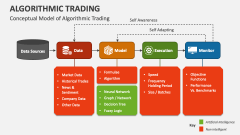
In fact, AI and humans could end up working together rather than competing. AI can handle the fast-paced data analysis and execute trades quickly, while humans can focus on strategy, making sure the big decisions take all factors into account. Human traders possess emotional intelligence and adaptability, which can be advantageous in stock trading. They can draw on their intuition and think creatively to make informed decisions, even in the face of uncertainty. Where human analysts might cover dozens of companies, AI systems can process earnings reports, news, social media sentiment, and alternative data sources for thousands of companies simultaneously. This breadth of analysis enables traders to identify opportunities across a vastly larger universe of securities and market conditions.
Prediction market boom spurs new VC fund backed by Polymarket, Kalshi CEOs
He is a long-time active investor and engages in research on emerging markets like cryptocurrency. Jeff holds a Bachelor’s Degree in English Literature with a minor in Philosophy from San Francisco State University. It’s also worth mentioning that StockHero offers a free tier that allows you to create and test basic trading bots using its algorithmic tools.
They operate without emotion, fatigue, or distraction, executing predetermined strategies with perfect discipline across 24-hour global markets. A human trader, regardless of skill, simply cannot monitor and trade across dozens of markets simultaneously with microsecond precision. But framing this as a competition misses the interesting reality emerging on trading floors worldwide. The most successful market participants today aren’t choosing between human insight and artificial intelligence but are instead forging powerful partnerships that leverage the strengths of both.
📊 Performance Showdown: Numbers Don’t Lie
The study proposes a collaborative model in which machines and humans perform complementary roles within statistical arbitrage systems. In this framework, AI models remain responsible for large-scale data processing, pattern recognition, and signal generation. Machine learning algorithms can continuously analyze market data, detect statistical anomalies, and identify potential trading opportunities far more efficiently than human analysts.
How Artificial Intelligence Trends Are Shaping Business Success
AI systems excel at continuous portfolio monitoring, stress testing against thousands of market scenarios, and implementing precise hedging strategies. They can instantly calculate complex risk metrics and enforce position limits, protecting traders from the psychological pitfalls that often lead to catastrophic losses. The human brain excels at pattern recognition, but AI systems can analyze vastly more data points across longer timeframes. Algorithms can detect subtle correlations between hundreds of market variables that would remain invisible to even the most experienced trader. These systems can simultaneously analyze fundamentals, technicals, sentiment data, and macroeconomic indicators across thousands of securities—a task impossible for any individual. Modern trading algorithms can split large orders into smaller ones, timing their execution to minimize market impact and secure better prices.
